
Bridging Digital Gaps from Long Island to Queens
The business case for ADA compliant web design in New York
New York businesses compete in a crowded digital arena, and ADA compliant web design has become a non-negotiable pillar of success. Organizations across Suffolk County, Nassau County, and Queens now recognize that accessibility drives broader market reach, stronger customer loyalty, and measurable revenue growth. When every visitor-regardless of ability-can navigate a site, bounce rates fall and trust rises. Long Island Web Design tailors accessibility strategies that align with each brand’s mission, ensuring legal peace of mind while deepening community ties. That dual value proposition is why more small businesses, nonprofits, and municipal departments invest in inclusive UX before expanding any new website feature.
Courts nationwide continue ruling that digital properties fall under public accommodation guidelines, making proactive compliance the smartest protection. Avoiding lawsuits is only the first layer; accessible websites also improve code quality, site speed, and search performance. Semantic HTML, alt text, and keyboard navigability signal well-structured content to search engines, lifting Long Island SEO rankings organically. Coding for inclusion also reinforces genuine corporate social responsibility, giving regional entrepreneurs a competitive edge when courting socially conscious consumers who expect ethical digital practices.
How accessible web development near Queens fuels local SEO and organic traffic
Search engines reward sites that deliver friction-free experiences on every device and assistive technology. Long Island Web Design builds logical heading hierarchies, descriptive links, and optimized ARIA roles that help Google parse context quickly. As a result, accessible web development near Queens accelerates indexation, boosts click-through rates, and improves positions on location-based queries like “coffee shop Astoria wheelchair friendly.” Local businesses then appear prominently in map packs, voice search results, and featured snippets, attracting both foot traffic and digital conversions. Because accessibility inherently reduces page bloat, load times shrink and Core Web Vitals improve-another critical ranking signal.
Organic traffic gains compound over time when inclusive elements stay current. Our ongoing audits track WCAG updates, ensuring structured data and alt attributes reflect evolving content. That continuous refinement prevents keyword cannibalization while amplifying long-tail visibility for phrases such as “disability friendly UX Long Island” and “ADA compliant ecommerce builds on Long Island.” Accessibility is not a one-off checkbox but an SEO flywheel that keeps spinning value back into every marketing channel our clients run.
Long Island ADA website experts translating WCAG 2.2 into real-world user value
The WCAG 2.2 guidelines can appear daunting on paper, yet Long Island Web Design converts them into practical design decisions that feel intuitive. Our certified specialists break each success criterion into user stories: a color-blind shopper finding the checkout button effortlessly, or a commuter activating voice navigation during a train ride. By mapping guidelines to concrete scenarios, we demystify technical jargon for stakeholders and keep the project focused on human outcomes. That empathy-driven methodology sets our Long Island ADA website experts apart from template-only vendors.
We also leverage automated scans and manual testing with screen readers, switch devices, and eye-tracking tools to validate that theoretical compliance equals authentic comfort. If WCAG calls for sufficient contrast, we prototype multiple palettes and run contrast analyzers before final approval. This meticulous process ensures that every pixel and line of code delivers real-world value, solidifying customer confidence and expanding the client’s online presence beyond Long Island into the greater New York market.
Engineering Inclusive Experiences with Long Island Web Design
Rapid ADA compliance audits uncovering color contrast and keyboard pitfalls
Our rapid audits blend AI crawlers with human evaluation to flag high-risk issues in days rather than weeks. We begin by analyzing color contrast across templates, spotlighting buttons and navigation links that are invisible to users with low vision. Because many older sites rely on outdated CSS, insufficient contrast often appears in subtle hover states or form field placeholders. By documenting each instance with screenshots and severity levels, we provide an actionable roadmap that clients can prioritize alongside other marketing needs.
Keyboard accessibility receives equal scrutiny. Using only the Tab, Space, and Arrow keys, our testers attempt full site journeys: adding products to carts, submitting contact forms, and downloading resources. Sticky elements, hidden focus rings, or misordered tabindex values frequently halt progress. Once identified, our developers rebuild focus indicators, reorder DOM elements, and ensure logical progression-turning dead-ends into seamless paths that satisfy every visitor, especially those using adaptive keyboards or sip-and-puff devices.
Screen reader optimized sites and alt text strategy for Queens small businesses
Screen reader users rely on concise, contextual language rather than decorative prose. Our content team collaborates with Queens entrepreneurs to craft accurate alt descriptions that convey both function and emotion without redundancy. Product imagery receives nuanced labels highlighting size, color, and purpose, while decorative flourishes are marked with null alt attributes to reduce cognitive overload. This balance keeps auditory output efficient while still maximizing search relevance.
We also structure headings, lists, and landmark regions so assistive software like NVDA or VoiceOver can announce clear page outlines. Each main navigation zone receives ARIA-labelled roles, helping visitors jump directly to the information they need. During user acceptance testing, we invite community volunteers who use screen readers daily; their feedback often uncovers phrasing ambiguities or missing skip links that automated tools overlook. By iterating quickly on that feedback, our screen reader optimized sites set a new neighborhood standard for inclusive storytelling.
Custom forms with ARIA labels and voice search friendly UX for mobile devices
Forms remain critical conversion points, yet they are notorious accessibility hazards. We craft custom field components that announce purpose and status changes through properly associated labels, dynamic aria-live regions, and clear error recovery guidance. When validation fails, focus shifts immediately to the problematic input and an audible description explains the fix, ensuring no user feels stranded. This thoughtful orchestration lowers form abandonment rates and elevates brand perception, particularly among audiences who value empathetic digital touchpoints.
Voice search is quickly becoming the preferred input method for multitasking New Yorkers. To capitalize on that trend, we optimize semantic markup so assistants like Siri and Google can parse business hours, addresses, and FAQ content accurately. Combined with concise microcopy and button labels under 24 characters, our voice search friendly UX empowers commuters to complete tasks hands-free, whether they are requesting curbside pickup or scheduling a service call.
Accessible Shopify and WordPress builds that boost ecommerce conversions
Template marketplaces promise quick launches but rarely meet accessibility benchmarks out of the box. Our developers start from lightweight, WCAG-ready frameworks, then harden them further with linting pipelines and manual QA. Within Shopify, we override default themes to expose hidden headings, remove non-semantic div structures, and enable keyboard-operable carousels. These optimizations shorten the customer journey by eliminating needless gestures, directly increasing average order value.
On the content management front, our team configures inclusive website design services near Queens into block patterns that enforce contrast ratios and alt text prompts for every new upload. Editors can publish rapidly without risking accidental violations. Meanwhile, custom-written Liquid snippets or Gutenberg blocks merge accessibility with brand aesthetics, delivering stylish storefronts that earn top Lighthouse scores for both performance and accessibility.
Disability friendly UI patterns for healthcare portals and real estate listings
Healthcare organizations and property brokers manage sensitive, life-altering information, so clarity is paramount. Our disability friendly UI patterns rely on generous white space, large target sizes, and predictable layouts that reduce cognitive load. For patient portals, multifactor authentication pages include extended timeout warnings announced through screen readers, preventing surprise logouts. Lab results and appointment summaries appear in high-contrast tables with sortable headers, accommodating both keyboard users and those with limited motor control.
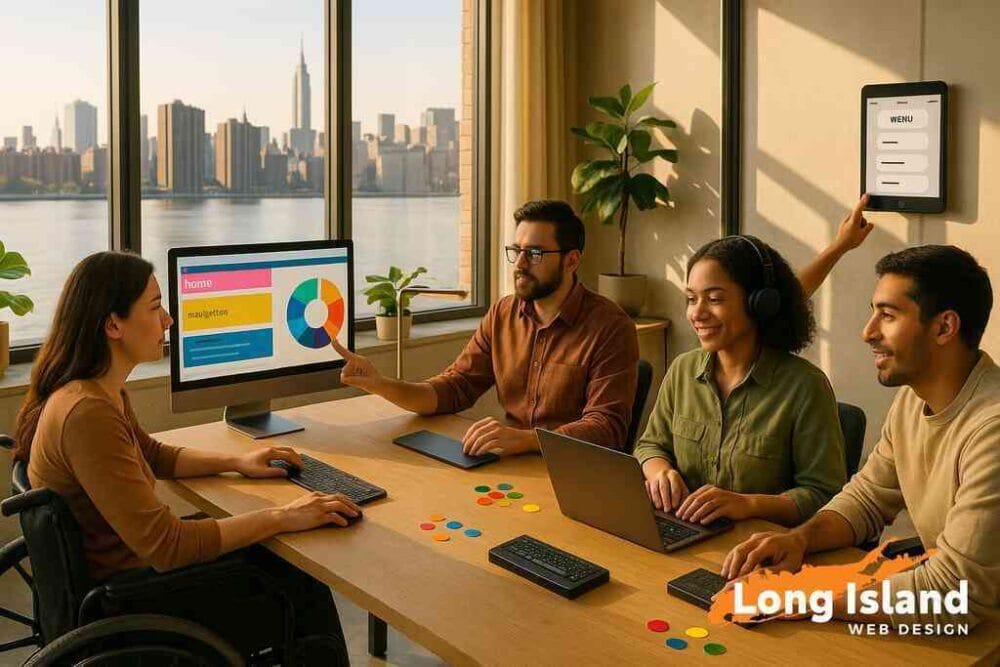
In real estate, prospective homeowners often sift through dense data-square footage, school zones, tax history. We convert those datasets into accessible accordions and map overlays whose markers support ARIA-labelled pop-ups. Coupled with responsive design, these interactive tools adapt gracefully from widescreen monitors to mobile devices, empowering every buyer or renter to make confident decisions wherever they browse. That approach aligns with broader industry trends in accessible real estate website marketing, reinforcing our commitment to usability across verticals.
Ongoing ADA monitoring packages and accessible PDF remediation services
Compliance is a moving target as new content, browser updates, and assistive technologies emerge. Our ongoing monitoring packages include scheduled scans, manual spot checks, and monthly reports detailing any regressions. When issues arise, we patch code promptly and document fixes for stakeholders, creating an auditable paper trail that demonstrates due diligence. This preventive maintenance typically costs far less than emergency overhauls prompted by demand letters or public complaints.
Many organizations still rely on downloadable brochures, menus, or policy documents. We convert legacy PDFs into tagged, navigable files that expose logical reading orders and text alternatives for embedded images. If source files are unavailable, we perform high-fidelity remediations using advanced OCR and structure mapping, ensuring compatibility with popular screen readers. Clients maintain brand consistency across mediums without excluding customers who depend on accessible documents for informed decision-making.
Inclusive branding and logo design that strengthens online presence
Visual identity carries symbolic weight, but poorly contrasted palettes or intricate logomarks can alienate users with limited vision. Our design team works with stakeholders to select hues that satisfy brand guidelines while meeting minimum AA or AAA contrast thresholds. We test logos at small sizes and against varied backgrounds, confirming legibility on everything from browser favicons to street-side signage. Accessible style guides then inform ad creative, merchandise, and social graphics, fostering brand recognition that transcends disability barriers.
Beyond color, typography and motion deserve careful consideration. Animated wordmarks pause on reduced-motion settings, respecting vestibular sensitivities. By weaving accessibility principles into the earliest stages of inclusive branding and logo creation in NY suburbs, we futureproof marketing assets and strengthen the overall online presence of Long Island enterprises aiming to scale regionally.
Tapping New York accessible website grants and Section 508 compliance resources
Budget constraints often deter small businesses and nonprofits from pursuing comprehensive ADA upgrades. Our consultants maintain an up-to-date database of state and federal grants that offset development costs, including funding streams earmarked for technology that benefits the disabled community. We guide applicants through paperwork, ensuring proposals articulate measurable accessibility outcomes and community impact. Successful grants can cover audits, redesigns, or assistive integrations, stretching limited resources further.
Section 508 standards apply primarily to government entities and contractors, yet they offer valuable blueprints for private organizations seeking robust compliance. We translate those federal requirements into actionable sprints, aligning them with WCAG checkpoints and client timelines. This hybrid framework provides clear milestones, facilitating smoother stakeholder sign-off while keeping projects eligible for public funding opportunities.
Futureproofing Queens Websites with Accessible Innovation
Mitigating ADA litigation risk while scaling responsive websites
Growth often introduces complexity: new microsites, seasonal landing pages, third-party widgets. Each addition creates potential compliance gaps if not governed by strict design systems. Long Island Web Design builds centralized component libraries that incorporate accessible patterns, allowing marketing teams to deploy campaigns rapidly without rewriting code. This governance minimizes exposure to costly lawsuits and reputational damage.
We also craft concise accessibility statements outlining commitment, contact channels, and ongoing improvements. Publishing those statements signals transparency to users and regulators alike, reducing the likelihood of legal escalation. As responsive web design standards evolve, our scalable architecture ensures that breakpoints, orientation changes, and gesture interactions stay compliant across emerging devices.
The ripple effect of user testing with assistive tech on conversion rate optimization
Usability labs traditionally focus on sighted, mouse-based personas, leaving critical insights untapped. By inviting screen reader users, switch device operators, and motor-impaired testers into our research cycles, we uncover friction that hinders everyone-long load times, vague calls to action, or confusing flows. Fixing those blockers accelerates task completion for able-bodied visitors as well, boosting overall engagement metrics.
Our CRO analysts correlate accessibility enhancements with KPIs such as form completion rates, cart recovery percentages, and dwell time. When data shows a lift, we record the win and feed findings into conversion optimization for accessible UX roadmaps, transforming inclusive design from a moral imperative into a clear profit driver.
Partnering with Long Island Web Design for continuous improvement and community impact
Digital inclusion is a journey, not a destination, and Long Island Web Design stands ready as a long-term ally for Queens and Nassau-Suffolk entrepreneurs. Our holistic approach unites web developers, graphic designers, content strategists, and ADA specialists under one roof, delivering cohesive solutions at every project stage. Clients gain a dedicated point of contact who orchestrates sprints, tracks KPIs, and surfaces growth opportunities informed by real user feedback.
By choosing a partner rooted in the local community, businesses also reinvest in the regional economy, fueling job creation and accessible innovation. Together we dismantle digital barriers, widen market reach, and set new benchmarks for responsible web craftsmanship in New York. When you are ready to build a more inclusive, compliant, and high-performing online presence, Long Island Web Design is only a phone call away.
Frequently Asked Questions
Question: Why is ADA compliant web design in Queens so critical for my small business, and how does Long Island Web Design guide the process?
Answer: An accessible site protects you from costly ADA litigation, widens your market to the one-in-four New Yorkers living with a disability, and lifts search visibility for local phrases like “coffee shop Astoria wheelchair friendly.” Our Long Island ADA website experts begin with a rapid ADA compliance audit, map every WCAG 2.2 requirement to real customer journeys, and then rebuild templates with semantic HTML, color-contrast fixes, and keyboard navigation design. The result is a faster, more user-friendly website that Google rewards and customers trust-delivered by a Long Island web design company that understands Queens neighborhoods as well as Suffolk and Nassau County regulations.
Question: How does Long Island Web Design carry out a WCAG 2.2 website audit on Long Island to uncover color contrast and keyboard pitfalls?
Answer: Our audit blends automated crawlers with hands-on testing by users of screen readers, switch devices, and keyboards only. We scan every URL for contrast ratios, mislabeled form fields, and missing alt attributes, then run a full keyboard walkthrough to flag hidden focus rings or broken tab order. Each issue is documented with screenshots, severity ratings, and code-level remediation notes so your in-house or outsourced team can act quickly. Because the service is performed by local Long Island web designers, we can schedule on-site strategy sessions in Queens, Suffolk County, or Nassau County, ensuring nothing is lost in translation.
Question: In the blog How Long Island Web Design Engineers ADA Sites Near Queens you mention accessible Shopify builds-how do these upgrades increase ecommerce conversions?
Answer: Default Shopify themes often hide headings, use div-only layouts, and require drag gestures that keyboard users cannot perform. We rebuild those templates with landmark roles, ARIA labels, and high-contrast buttons that meet or exceed WCAG 2.2. A cleaner, lighter codebase improves Core Web Vitals, while descriptive alt text and logical heading structures boost Long Island SEO. Shoppers complete checkouts faster, abandoned carts drop, and your store appears higher for terms such as inclusive ecommerce design New York and disability friendly UX Long Island.
Question: Does Long Island Web Design provide ongoing ADA monitoring packages and accessible PDF remediation services to keep my site litigation safe?
Answer: Yes. Our ongoing ADA monitoring packages include monthly scans, manual spot checks, and detailed compliance reports. When regressions appear-such as a new third-party widget without keyboard support-we patch or replace it before problems escalate. For downloadable content, we convert or tag PDFs so screen readers can navigate tables, headings, and images. Together, these services create a living compliance framework that satisfies ADA, Section 508, and New York state digital policies, giving you documented proof of due diligence if a demand letter ever arrives.
Question: Are there grants or Section 508 resources that Long Island Web Design can help my Queens nonprofit tap for an ADA website upgrade?
Answer: Absolutely. Our consultants track New York accessible website grants, federal technology funds, and private foundation programs that subsidize audits, redesigns, or assistive tech integrations. We handle paperwork, craft measurable accessibility goals, and align your project scope with Section 508 and WCAG 2.2 checkpoints so reviewers see clear community impact. Many nonprofits secure 50-100 percent of project costs through these channels, enabling a full ADA compliant web design that Queens audiences can rely on without draining internal budgets.